Status
Public repo, active build and experimental orchestration layer
Selected operating system / 02
A delivery office for turning useful ideas into scoped briefs, approved implementation handoffs, reviewable changes and clear closeout records.
Operating problem
Many useful ideas are clear enough to discuss but not clear enough to build. The missing layer is often not code; it is the operating translation between intent, constraints, approval, implementation and review.
Agent Office treats delivery as a governed workflow. The system prepares the brief and handoff, but the operator still approves the scope and judges the result.
Interface proof
A controlled delivery surface for moving work from architecture to handoff, review and closeout.
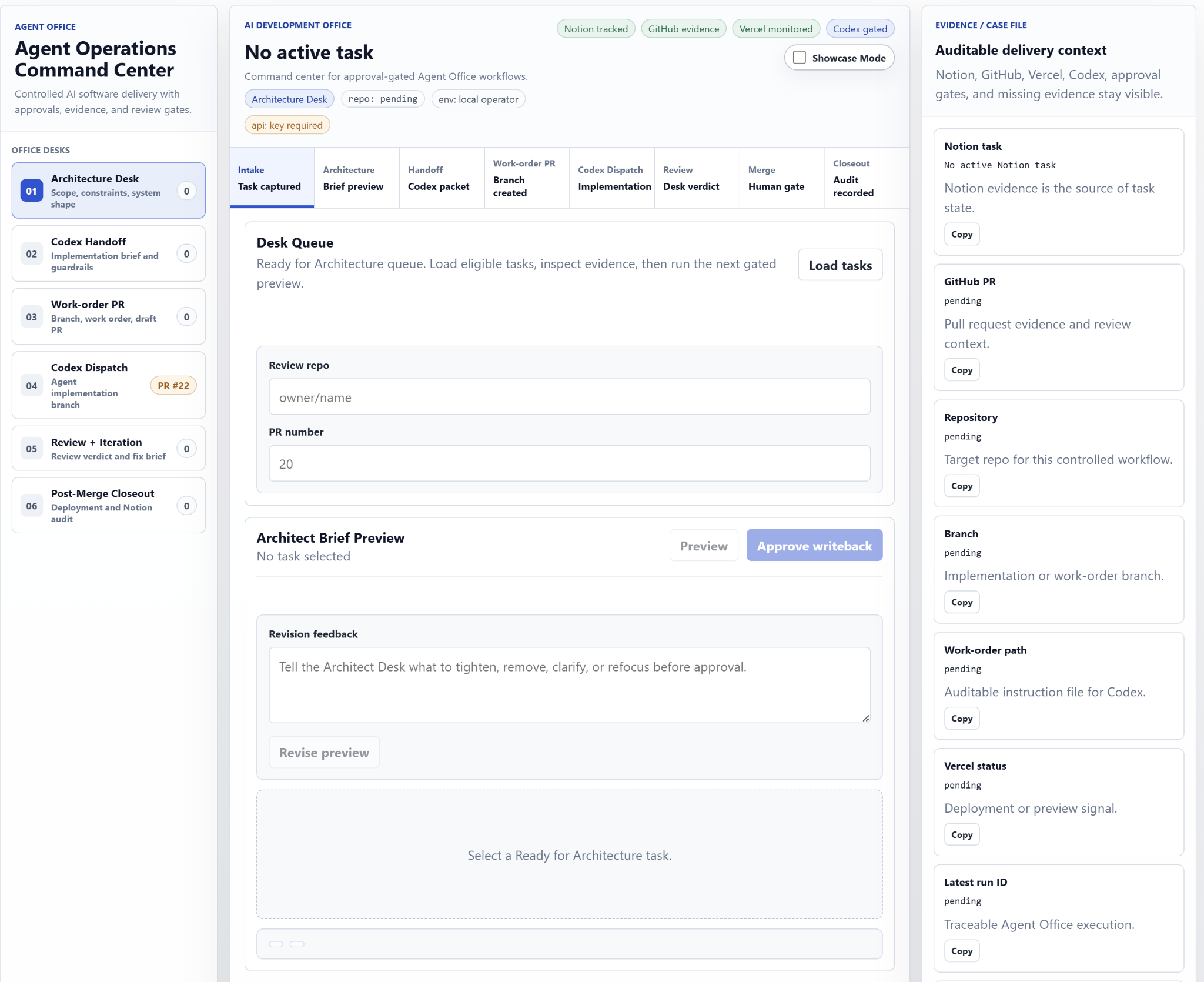
Workflow
The workflow keeps decisions visible as work moves from operating intent into implementation and preview.
Operating artefact
The office turns a working idea into a brief, proposal, approved handoff, reviewable implementation and closeout record.
Problem, constraints and operating shape are made explicit.
Scope, acceptance criteria and trade-offs are prepared for review.
The operator confirms what should move into build work.
The approved task becomes a precise implementation instruction.
Branch state, changes and review notes stay inspectable.
The change is checked on a live preview before closeout.
Architecture / stack
Notion holds the operating state, GitHub keeps review visible and Vercel makes the change inspectable before closeout.
Holds status, priority, brief links, review notes and closeout records.
Frames the operating problem, data shape, constraints and approval points.
Turns the brief into scoped work with clear acceptance criteria.
Carries the approved task into a coding-agent workflow without losing context.
Tracks branch state, draft PR readiness, review notes and change history.
Creates preview surfaces so changes can be inspected before closeout.
Interface proof
A public-safe view of the delivery packet, showing task state, repository context, approval boundary and audit trail without exposing secrets.
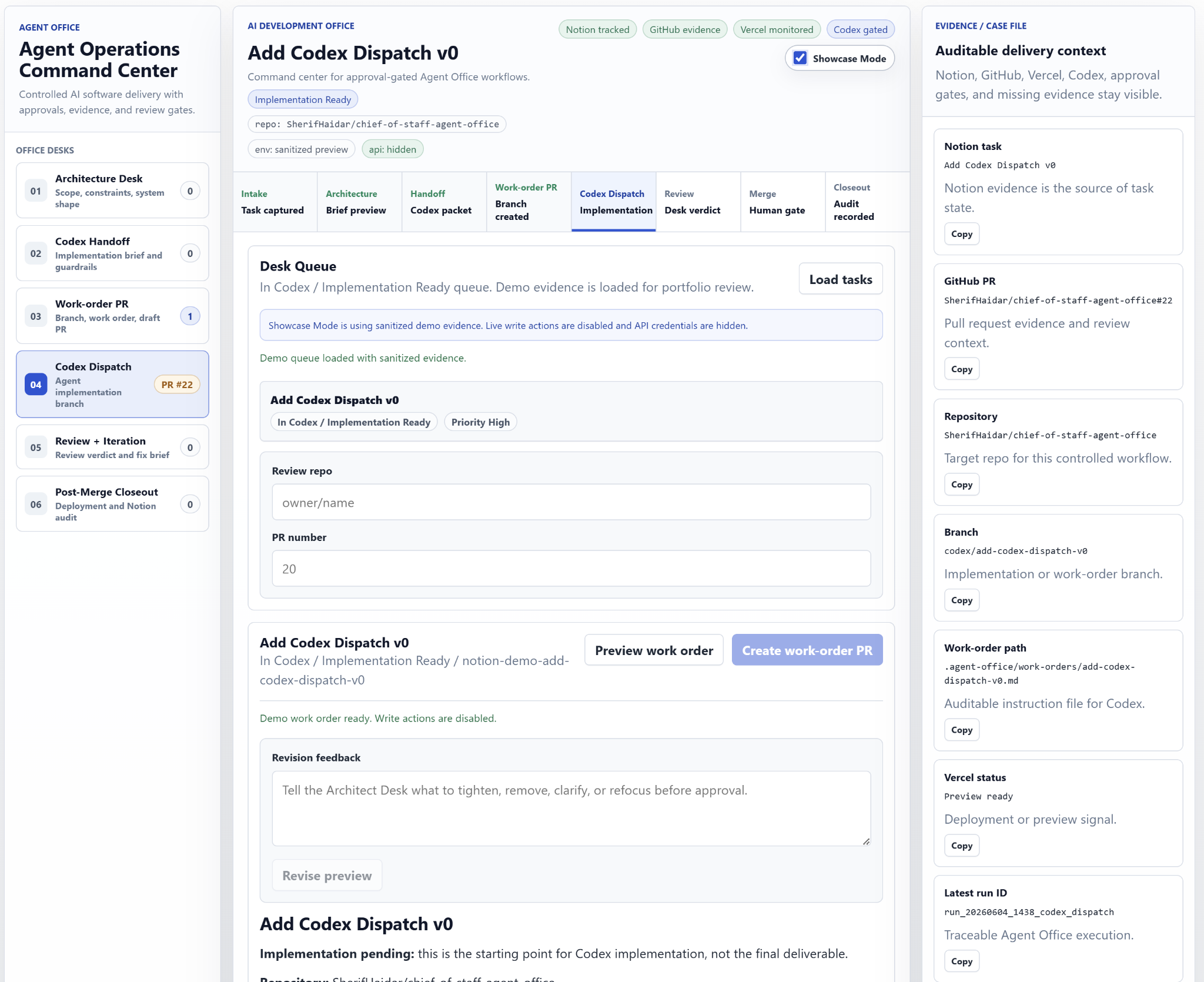
Working surfaces
The surfaces support the delivery rhythm without making the page about tooling.
Task state, briefs, approvals and closeout records live together.
Implementation stays isolated until the review path is ready.
Change history and review logic stay visible before merge.
Reviewable preview surface for the approved implementation.
The operating reason and delivery shape remain easy to inspect.
Outcome, decisions and follow-up are captured after delivery.
Governance
The system can prepare delivery context, but judgement stays with the operator.
The office is not a code generator. It is a control layer for turning approved work into reviewable delivery.
Where the value shows up
The value is in reducing the drag between deciding what should be done and knowing whether it was delivered properly.
Briefs, proposals, handoffs, review state and closeout records create an operating rhythm that makes delivery easier to inspect and improve.