Status
Working prototype and active personal operating system
Selected operating system / 01
A daily capture system for turning loose updates into structured tasks, decisions, blockers, reminders and confirmed operating records.
Operating problem
A note after a call, a thought between meetings, a project blocker or a follow-up can all contain operational value. Most tools ask the user to structure that information manually, so important context either gets lost or stays trapped in the wrong place.
The design principle is simple: capture naturally, structure intelligently and only write back after review.
Interface proof
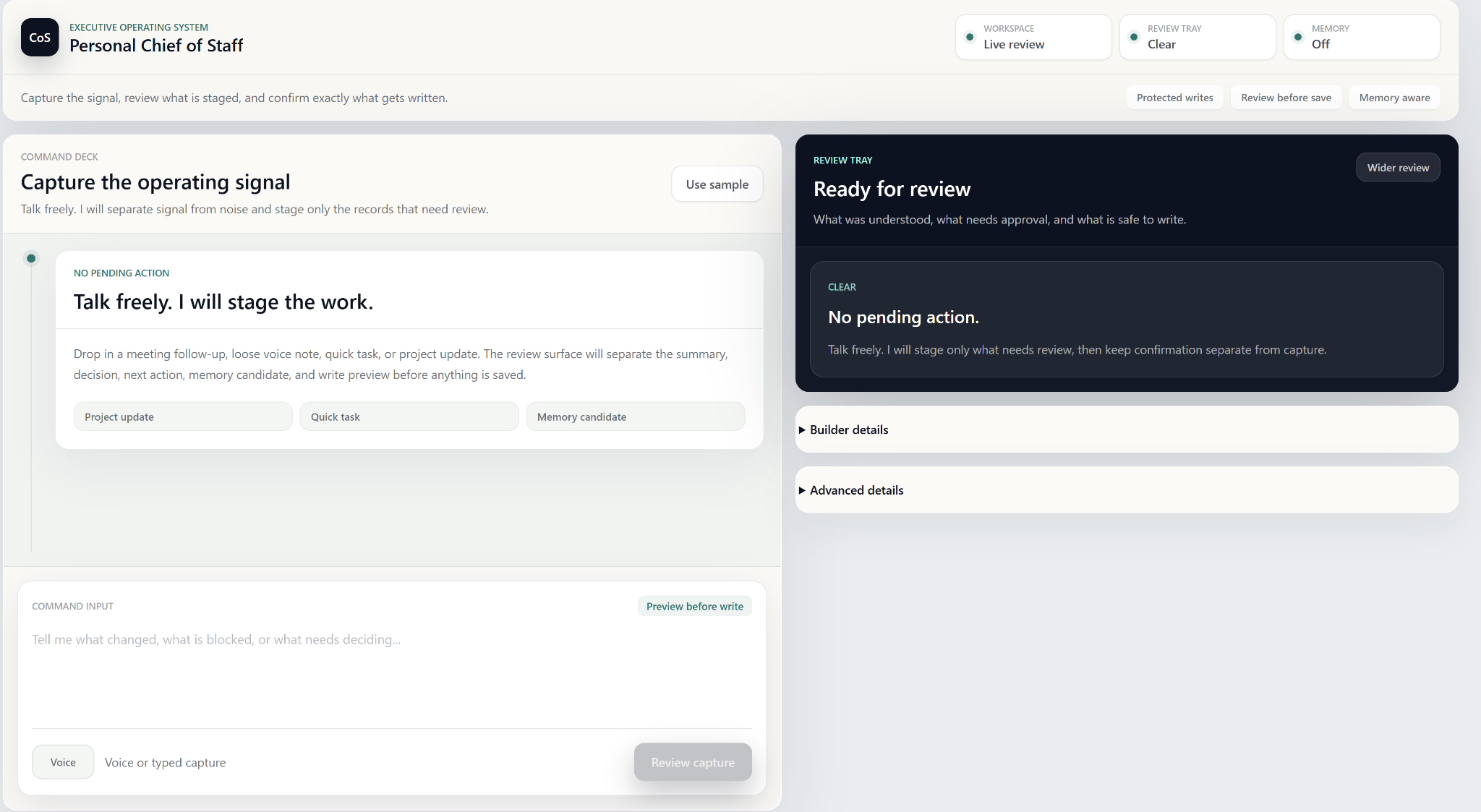
A live capture and review interface where loose updates are staged, separated and reviewed before anything is written back.
Workflow
The workflow makes each proposed destination visible before anything is written back.
Operating artefact
The system separates meaning, proposes destinations and waits for approval before anything moves into the workspace.
"Blocker on the project. Follow up next week. Status may need to change."
Approved records move into Notion and memory. Nothing writes silently.
Architecture / stack
The AI layer structures and routes the signal, but the system around it controls preview, confirmation, memory and delivery.
Typed updates, voice-note text and quick capture moments.
The AI layer separates tasks, blockers, decisions and project movement.
Proposed records pause for review, edit or rejection before writeback.
Notion receives confirmed records; Supabase stores useful durable context.
GitHub tracks the system and Vercel hosts preview and production surfaces.
Stack surfaces
Interface, workspace, data layer, repository and deployment surfaces support the operating story while keeping the public view focused on the workflow.
Build and test application behaviour before deployment.
Track implementation history and development direction.
Review changes safely before promoting them.
Live version of the capture and confirmation surface.
Persistent memory and structured data for durable context.
Receives confirmed records and supports project follow-through.
Governance
The system prepares the operating consequences of an update. The operator decides.
A note-taking app stores the sentence. This system prepares the operating consequences of the sentence.
Where the value shows up
The same pattern appears in team settings: updates are fragmented, decisions are easy to lose and follow-through often depends on manual discipline.
This system reduces that drag by turning unstructured input into usable records, visible next actions and reviewable operating context.